Children's teeth need the same care as adults', and the habits they learn early stay with them. Milk teeth matter too: they hold the space for the permanent teeth, help a child chew and speak, and a decayed milk tooth can hurt just as much as an adult one.
1. Brush two times a day
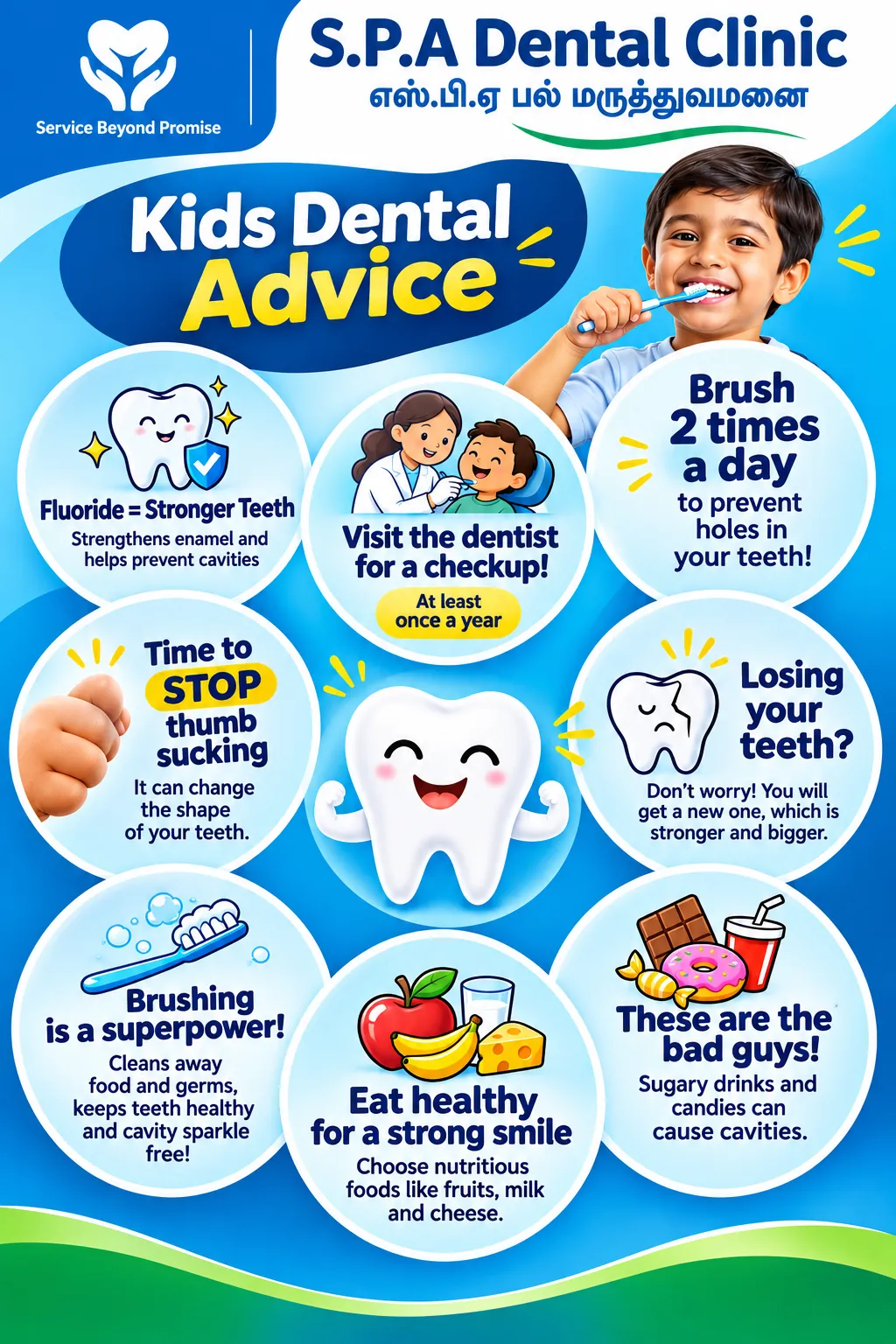
Brush in the morning and, most importantly, last thing at night. Use a soft children's toothbrush. Help with brushing until your child can do it well on their own — usually around seven or eight years old.
2. Fluoride makes teeth stronger
Fluoride toothpaste strengthens the enamel and helps prevent cavities. Use a smear the size of a grain of rice for children under three, and a pea-sized amount from three to six. Teach them to spit it out rather than swallow it.
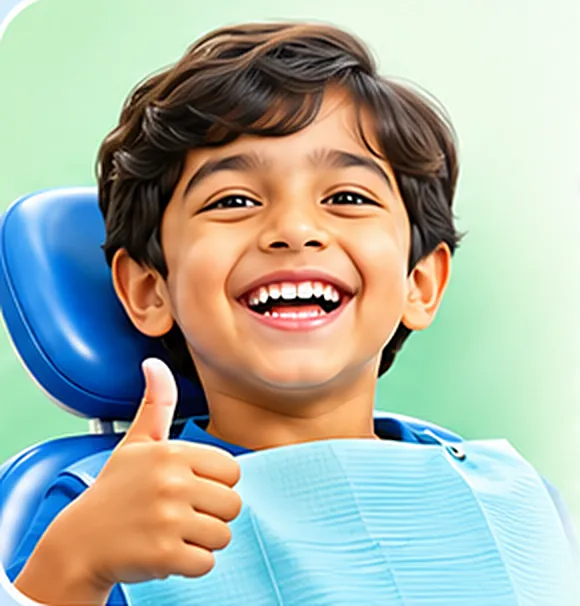
3. Visit the dentist for a check-up
Bring your child for their first visit when the first tooth comes through, and then at least once a year. Regular check-ups find small cavities before they hurt, and a child who meets the dentist when nothing is wrong is far less afraid when something is.
4. Time to stop thumb sucking
Thumb sucking is normal in babies and most children stop on their own by about four. If it carries on after the permanent front teeth start coming in, it can push the teeth and change the shape of the bite. Gentle encouragement works better than scolding; ask us if you are worried.
5. Losing milk teeth is normal
Milk teeth usually start falling out around the age of six, and the last ones go by about twelve. Don't worry — the permanent tooth that replaces each one is bigger and stronger. Do see us if a milk tooth is lost early through decay or injury, or if a permanent tooth comes in behind a milk tooth that has not fallen out.
6. Brushing is a superpower
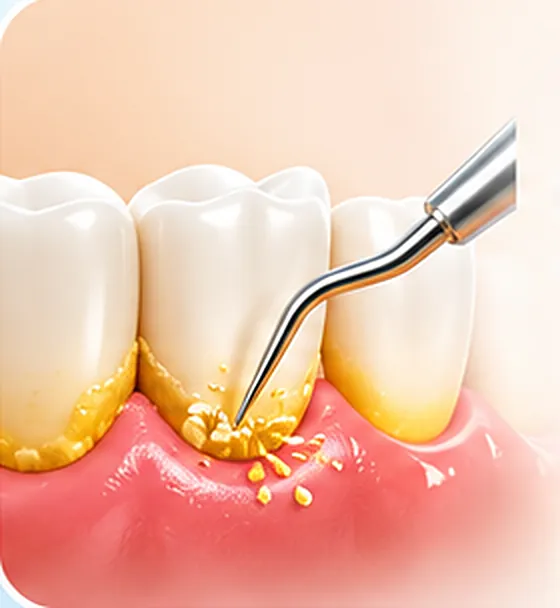
Brushing cleans away food and the germs that cause cavities. Make it a routine: two minutes, every surface, and floss between teeth that touch.
7. Eat healthy for a strong smile
Fruits, vegetables, milk, curd and cheese are good for teeth. Water is the best drink between meals.
8. Sugar is the bad guy
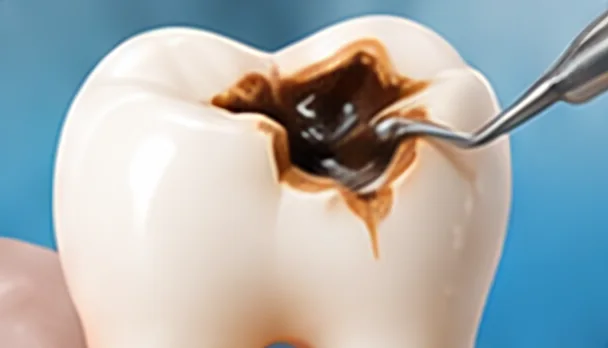
Sugary drinks, sweets, chocolates and biscuits feed the germs that make holes in teeth. It is how often, more than how much: keep sweets for mealtimes rather than snacking through the day, and never put a child to bed with a bottle of milk or juice.
9. Don't ignore toothache
Pain, a dark spot, swelling or a bad smell from the mouth are reasons to come in soon. Small cavities in children's teeth can often be filled simply — a GIC filling, which also releases fluoride, costs ₹500 – ₹700 at our clinic.
Children's dentistry at S.P.A Dental Clinic
Dr. S. Parvatham, B.D.S, sees children every day at our clinic at Salamangalam Junction, Padappai. A consultation is ₹200. We explain everything to the child as well as the parent, so the visit is calm and simple.
Frequently asked questions
When should my child first see a dentist?
When the first tooth appears, or by their first birthday, and then at least once a year. Early visits find small problems before they hurt and help children feel at ease with the dentist.
How much toothpaste should a child use?
A smear the size of a grain of rice for children under three, and a pea-sized amount for children aged three to six, using a fluoride toothpaste. An adult should help with brushing until the child is about seven or eight.
Is thumb sucking bad for my child's teeth?
Most children stop by about four, and it does no harm before then. If it continues after the permanent front teeth start coming in, it can change the shape of the teeth and the bite, so it is worth gently helping them stop.
Do milk teeth need fillings if they will fall out anyway?
Often, yes. Milk teeth hold space for the permanent teeth and a decayed one can cause pain and infection. Small cavities can be filled simply; at S.P.A Dental Clinic a GIC filling costs ₹500 – ₹700.