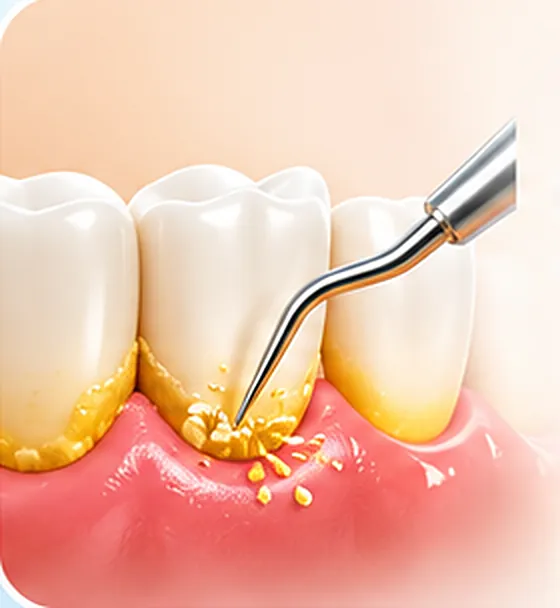
Plaque that is not brushed away hardens into tartar (calculus) within days. Tartar sticks to the teeth, especially behind the lower front teeth and along the gum line, and no toothbrush can remove it.
Signs you need a cleaning
- Gums that bleed when you brush
- Bad breath that does not go away
- Yellow or brown deposits along the gum line
- Red, swollen or receding gums
Left alone, the gum inflammation (gingivitis) can turn into gum disease (periodontitis), which destroys the bone around the teeth and is a leading cause of loose teeth in adults.
What scaling involves

The dentist uses an ultrasonic scaler and fine hand instruments to remove the tartar above and just below the gum line, then polishes the teeth. A mild cleaning is quick; a deep cleaning treats tartar further under the gums and may take longer.
| Scaling – mild | ₹1,000 |
|---|---|
| Scaling – deep | ₹1,500 |
Common worries, answered
Does scaling weaken teeth or make gaps? No. It removes only the tartar. If gaps appear afterwards, they were already there — hidden under the tartar, where the gum had pulled back.
Will my teeth feel sensitive? Sometimes, for a few days, as the surfaces that were covered are exposed. A sensitivity toothpaste helps.
How often?
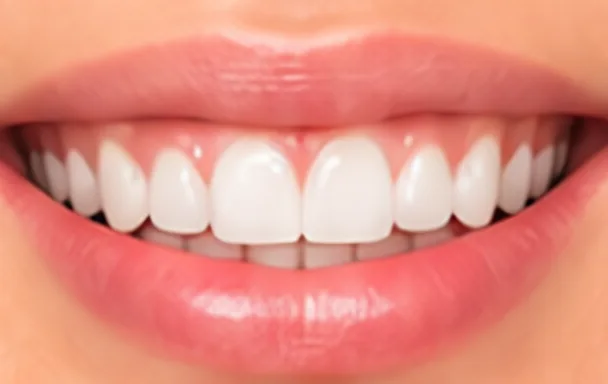
Every six months for most people, or as the dentist advises if you have gum disease, smoke or have diabetes.
Teeth cleaning at S.P.A Dental Clinic
Dr. S. Parvatham, B.D.S, checks your gums first and tells you whether a mild or deep cleaning is needed, before starting.
Frequently asked questions
How much does teeth cleaning cost at S.P.A Dental Clinic?
Scaling costs ₹1,000 for a mild cleaning and ₹1,500 for a deep cleaning. The dentist checks your gums first and tells you which you need.
Does scaling damage teeth or cause gaps?
No. Scaling removes only tartar. Any gaps seen afterwards were already there, hidden under the tartar where the gum had receded.
How often should I get my teeth cleaned?
Every six months for most people, or more often if you have gum disease, smoke or have diabetes.
Why do my gums bleed when I brush?
Usually because plaque and tartar along the gum line have inflamed the gums (gingivitis). A professional cleaning and good brushing usually stop it.