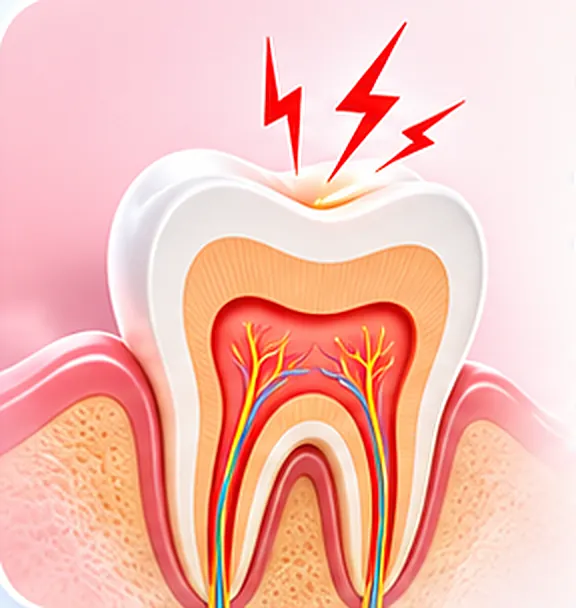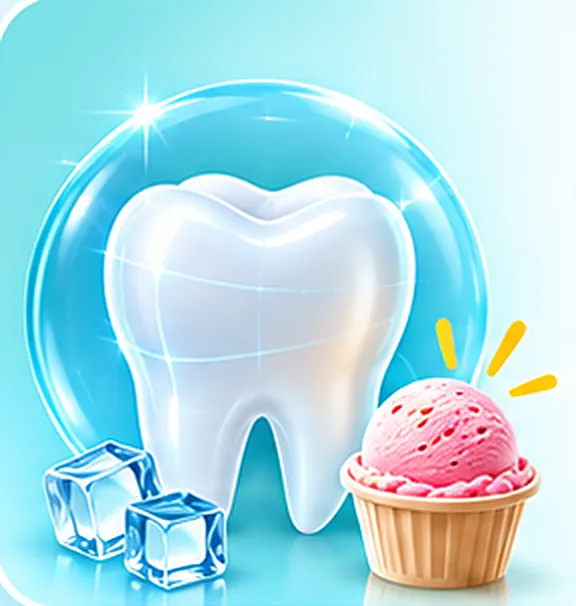
A sharp, short twinge from ice water, hot tea or something sweet is tooth sensitivity. It happens when dentine, the layer under the enamel, is exposed: dentine has tiny channels that carry the cold or heat to the nerve.
What causes sensitive teeth
- Worn enamel from brushing too hard, a hard brush, or acidic food and drinks (cola, citrus, pickles).
- Receding gums that expose the root, which has no enamel at all.
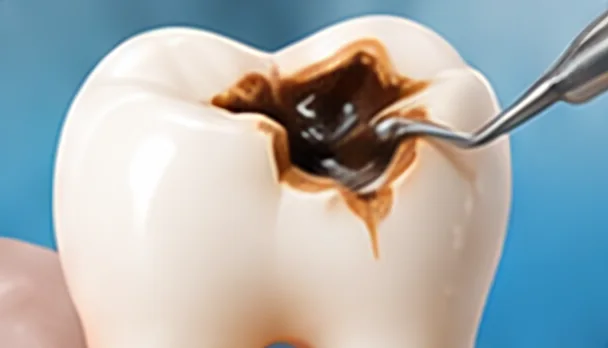
- A cavity or a cracked tooth, usually felt in one tooth.
- Grinding your teeth, often at night.
- After a cleaning or a filling, for a few days, which is normal and settles.
What helps at home
- Brush twice a day with a sensitivity toothpaste; it usually takes two to four weeks of regular use to work. Spit, but do not rinse, after brushing.
- Use a soft brush with gentle strokes, not hard scrubbing.
- Have acidic drinks less often, through a straw, and wait about 30 minutes before brushing after them.
When to see a dentist

- The sensitivity is in one tooth, or you can see a hole or dark spot.
- The pain lingers for more than a few seconds after the cold or heat is gone.
- It hurts to bite.
- It has not improved after a few weeks of sensitivity toothpaste.
These can mean a cavity that needs a filling or a nerve that is inflamed, and both are simpler to treat early.
What the dentist can do
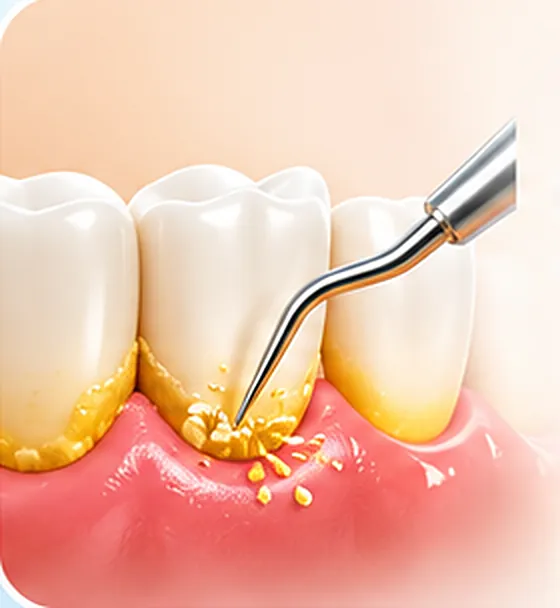
Depending on the cause: a fluoride varnish painted on the sensitive area, a tooth-coloured filling to cover an exposed root or a cavity, treatment of the gums, or a night guard if you grind. When the nerve itself is damaged, root canal treatment may be needed.
Sensitive teeth at S.P.A Dental Clinic
Dr. S. Parvatham, B.D.S, finds the cause before suggesting treatment, and confirms the cost first. A consultation is ₹200.
Frequently asked questions
Why are my teeth suddenly sensitive?
Common reasons are a new cavity or crack, gums that have pulled back, brushing too hard, acidic food and drinks, or a recent cleaning or filling. Sudden sensitivity in one tooth should be checked by a dentist.
Does sensitivity toothpaste really work?
For sensitivity from worn enamel or exposed roots, usually yes, after two to four weeks of brushing with it twice a day. It does not fix a cavity or a crack.
Is tooth sensitivity a sign of a cavity?
It can be, especially when it is in one tooth, lingers, or comes with a visible spot. Sensitivity across many teeth is more often worn enamel or receding gums.